The Evolution of AI Symptoms Checkers

Artificial Intelligence is no longer just a buzzword; it is a vital part of modern medical triage. At HealthXray, we integrate data-driven algorithms to help you navigate your symptoms with confidence and scientific backing.

Condition Type Key Indicators Priority
Systemic Fever, Fatigue, Chills Moderate
Localized Rash, Joint Pain, Swelling Low
Critical Shortness of Breath, Chest Pain Emergency

Why Contextual Health Data Matters

Every individual is unique. A symptom in a child can mean something entirely different in an adult. Our tools prioritize age, gender, and pre-existing conditions to deliver personalized health insights.

Biological System Common Reports Tool to Use
Metabolic Weight gain, Slow digestion BMI & Calories
Reproductive Cycle changes, Pregnancy Period Tracker

Your journey to wellness starts with understanding your body. Use our tools today to get an evidence-based overview of your health status.

The Ultimate Guide to Digital Health: AI Diagnostics & Wellness in 2026

In the modern era, digital health tools like AI symptoms checkers are bridging the gap between initial concern and professional medical advice. At HealthXray, we provide evidence-based insights to empower your wellness journey.

1. How AI Symptoms Checkers Transform Diagnostics

An AI symptoms checker is a sophisticated, data-driven tool designed to analyze thousands of clinical patterns. It looks for correlations between your reported issues, demographic data (like age and gender), and known disease markers.

It is crucial to understand that an AI symptoms checker is a **decision-support tool**, not a diagnostic device. A computer cannot perform a physical exam, listen to your heartbeat, or conduct blood tests. Therefore, any report generated should be viewed as a "probability" rather than a "certainty".

Severity Level Typical Symptoms Required Action
Minor Mild cough, slight fatigue, sneezing Home Rest & Monitoring
Moderate Persistent fever, localized pain Schedule GP Appointment
Emergency Chest pain, difficulty breathing Call Emergency Services

2. Understanding the Human Digestive System

The digestive system is a complex network where saliva, gastric juice, and pancreatic juice work together to transform food into energy. Understanding how these organs interact is key to identifying symptoms like bloating, acid reflux, or IBS.

3. The Role of BMI and Calorie Tracking

Body Mass Index (BMI) provides a baseline for understanding your weight-to-height proportions. Tracking calories ensures your body receives the optimal energy required for daily functions, maintaining that healthy "glow".

4. Women's Health & Hormonal Tracking

Using period and pregnancy trackers allows for a deeper understanding of hormonal cycles. Irregular patterns caught early can help in the professional diagnosis of conditions like PCOS or thyroid imbalances.

5. Why Evidence-Based Health Matters

Accuracy is the cornerstone of any health tool. Our logic is derived from peer-reviewed medical journals and clinical guidelines to ensure the information is grounded in scientific reality.

6. Conclusion: A Guide, Not a Doctor

Always consult a licensed medical practitioner for a formal diagnosis. Digital tools are here to guide you, provide data, and help you stay informed about your biological systems.

5. The Gut-Brain Axis: How Your Digestive System Affects Mental Health

Modern medical science has identified a profound connection between the gastrointestinal tract and the brain, often referred to as the "Gut-Brain Axis." This bidirectional communication means that your digestive health can directly influence your mood and cognitive functions.

When you experience chronic stress, your body’s "fight or flight" response can slow down digestion, leading to symptoms like bloating or stomach pain. Conversely, an unhealthy gut microbiome can send signals to the central nervous system that trigger anxiety or brain fog. Using our digestive health insights can help you identify these patterns early.

6. Limitations: Why AI is a Guide, Not a Doctor

It is crucial to understand that an AI symptoms checker is a **decision-support tool**, not a diagnostic device. A computer algorithm, no matter how advanced, cannot perform a physical exam, listen to your heartbeat with a stethoscope, or conduct necessary blood tests.

Therefore, any report generated by digital tools should be viewed as a "probability" based on data patterns rather than a medical "certainty". We strongly advise all users to consult a licensed medical practitioner for a formal diagnosis and treatment plan.

Body System Primary Focus Common Symptoms Monitored
Nervous System Brain & Nerve Function Headaches, Dizziness, Numbness
Respiratory System Oxygen Intake Shortness of breath, Persistent cough
Circulatory System Blood Flow Palpitations, Chest pressure
Endocrine System Hormone Balance Unexplained weight gain, Fatigue

7. The Role of Evidence-Based Health in 2026

As we navigate through 2026, the focus of HealthXray remains on "Evidence-Based Health". This means the logic behind our symptoms checkers and calculators is derived from peer-reviewed medical journals, clinical guidelines, and statistical health data.

By relying on proven facts rather than anecdotal evidence, we provide users with a report that is grounded in scientific reality, helping bridge the gap between initial symptoms and professional care.

8. Final Summary: Empowering Your Wellness

Your journey to health (or "Glow") is a continuous process. Whether you are tracking your BMI, monitoring a pregnancy, or checking sudden symptoms, the goal is to stay informed. Digital tools offer a convenient first step, but the final word should always come from a healthcare professional.
Frequently Asked Questions (FAQs)

Our tool uses evidence-based medical data to provide a probability of conditions. However, it is a decision-support tool and not a final medical diagnosis.

No. In case of life-threatening symptoms like chest pain or difficulty breathing, call emergency services immediately.

We use the standard scientific formula based on your weight and height to provide your BMI category.

Yes, it is a tracking tool based on clinical milestones, but you should always follow your doctor's specific advice during pregnancy.

Glow represents achieving optimal health through data-driven decisions and evidence-based wellness practices.

It estimates your daily energy needs based on your activity level, age, and metabolic markers.

Privacy is our priority. We follow strict data guidelines as outlined in our Privacy Policy.

No, we provide informational guides. Treatment must only be prescribed by a licensed medical practitioner.

Body Mass Index (BMI): The Definitive Guide to Understanding Your Health Metrics

Body Mass Index (BMI) is more than just a number; it is a vital screening tool used by healthcare professionals worldwide to assess a person's body fat based on their height and weight. At HealthXray, we help you decode this metric to achieve your ultimate "Glow".

1. What Exactly is Body Mass Index (BMI)?

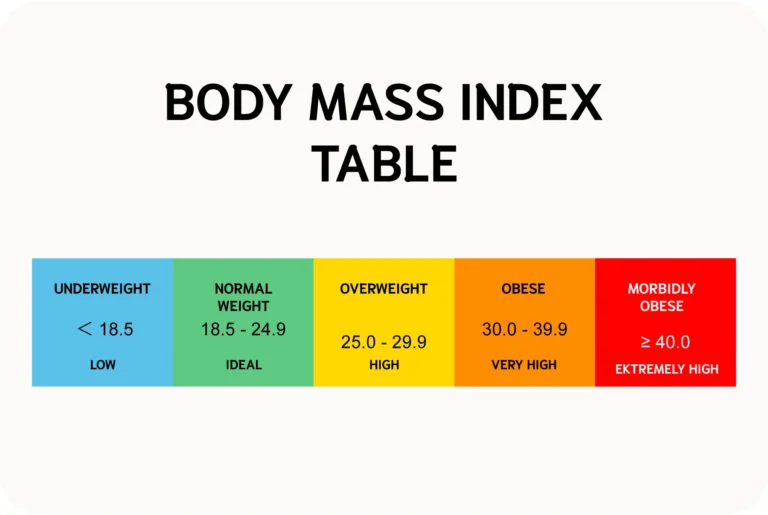
Comprehensive Body Mass Index (BMI) Chart and Categories

Figure: Official BMI classification table for health assessment.

Body Mass Index is a mathematical calculation that determines whether a person is within a healthy weight range for their height. Developed in the 19th century by Adolphe Quetelet, it has become the international standard for categorizing obesity, overweight, and underweight conditions. While it doesn't directly measure body fat, it correlates strongly with more direct measures of body fatness.

BMI Range Classification Health Risk Level
Below 18.5 Underweight High (Nutrient Deficiency)
18.5 – 24.9 Healthy Weight Low (Optimal Range)
25.0 – 29.9 Overweight Increased (Metabolic Risk)
30.0 or Higher Obese High (Chronic Disease Risk)

2. Why Monitoring Your BMI is Crucial in 2026

In today's fast-paced world, lifestyle-related diseases like Type 2 Diabetes and Hypertension are on the rise. BMI serves as an early warning system. Research shows that maintaining a healthy BMI significantly reduces the risk of cardiovascular diseases, joint problems, and certain types of cancer.

3. How to Calculate BMI: The Scientific Formula

The BMI formula is simple but powerful. In the metric system, it is calculated as weight in kilograms divided by height in meters squared ($BMI = \frac{kg}{m^2}$). For those using the imperial system, the formula is: $BMI = \frac{lbs \times 703}{in^2}$.

4. Understanding the Underweight and Obese Extremes

Being **Underweight (BMI < 18.5)** can lead to a weakened immune system, brittle bones, and chronic fatigue. It often signals that the body isn't getting enough nutrients to maintain its biological systems.

On the other end, **Obesity (BMI > 30)** is classified into three classes. Class 3 obesity (BMI over 40) is considered "severe" and requires immediate clinical intervention. It puts immense pressure on the heart, lungs, and skeletal structure.

Obesity Class BMI Range Clinical Severity
Class I 30.0 - 34.9 Moderate Risk
Class II 35.0 - 39.9 Severe Risk
Class III 40.0+ Morbid/Extremely Severe

5. The Limitations: Muscle vs. Fat

One common critique of BMI is that it does not distinguish between muscle mass and fat. Athletes or bodybuilders may have a "high" BMI due to muscle weight, even though they have very low body fat. Therefore, it is always recommended to use BMI alongside other metrics like Waist-to-Hip Ratio and Body Fat Percentage.

6. Actionable Tips to Reach Your Ideal BMI Range

If your BMI is outside the healthy range, don't panic. Small, evidence-based changes can make a massive difference:

7. Conclusion: Your Gateway to Wellness

BMI is a foundational step in your health journey. By understanding where you stand, you can take control of your future. Remember, your "Glow" starts with a healthy body and an informed mind.

BMI Frequently Asked Questions

For children and teens, BMI is calculated the same way but interpreted differently using age and sex-specific percentiles.

While not a direct predictor, a high BMI is strongly associated with high blood pressure and cholesterol, which are risk factors for heart disease.

Disclaimer: HealthXray provides evidence-based health information for educational purposes only. The AI Symptoms Checker and calculators are decision-support tools and do not provide medical diagnosis or treatment. Always consult a qualified healthcare professional for medical advice.