
Introduction to the Human Digestive System
The human digestive system is a complex biological system responsible for breaking down food into smaller molecules so that the body can absorb nutrients and use them for energy, growth, and repair. Digestion begins in the mouth and continues through a series of organs including the esophagus, stomach, small intestine, large intestine, liver, pancreas, and salivary glands.
Three important digestive secretions play a major role in digestion: saliva, gastric juice, and pancreatic juice. These fluids contain enzymes and chemical substances that help convert complex food particles into simpler forms that can be absorbed by the body.
Main Organs of the Digestive System
The digestive system consists of a long muscular tube called the alimentary canal and several accessory organs that assist in digestion.
| Organ | Function |
|---|---|
| Mouth | Starts digestion by chewing food and mixing it with saliva |
| Esophagus | Transfers food from mouth to stomach |
| Stomach | Breaks down food using gastric juice |
| Small Intestine | Major site of digestion and nutrient absorption |
| Large Intestine | Absorbs water and forms feces |
| Liver | Produces bile to digest fats |
| Pancreas | Produces pancreatic juice containing digestive enzymes |
Saliva and Salivary Glands
Saliva is a clear watery fluid secreted by the salivary glands in the mouth. It plays a crucial role in the initial stages of digestion by moistening food and helping in swallowing. On average, a human produces about 1 to 1.5 liters of saliva per day.
Types of Salivary Glands
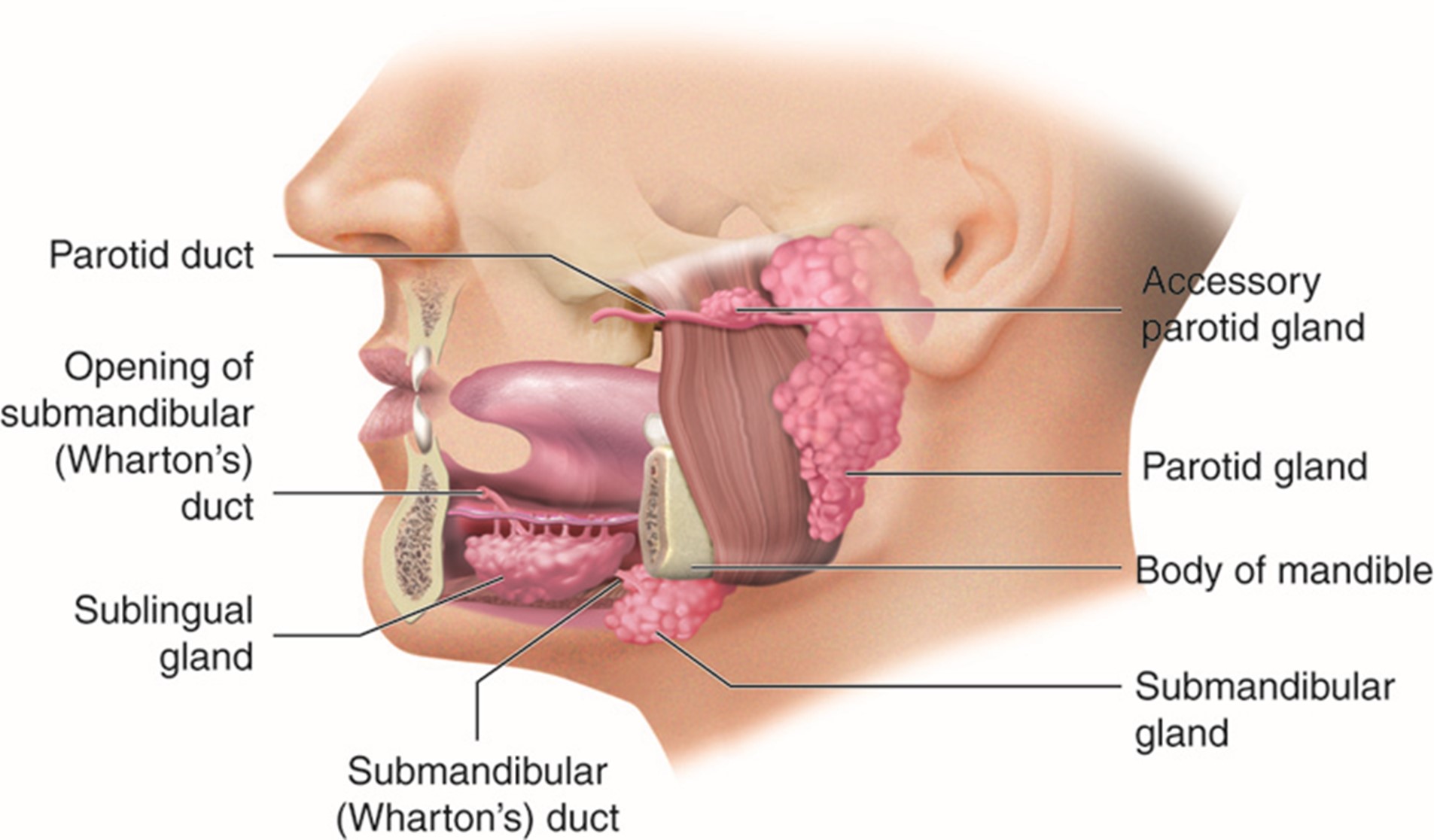
| Salivary Gland | Location |
|---|---|
| Parotid Glands | Located near the ears |
| Submandibular Glands | Located beneath the lower jaw |
| Sublingual Glands | Located under the tongue |
Composition of Saliva
Saliva is composed mainly of water and a small amount of organic and inorganic substances that help in digestion and oral protection.
| Component | Description |
|---|---|
| Water (99.5%) | Helps dissolve food substances |
| Enzymes | Start digestion of carbohydrates |
| Mucin | Lubricates food for easy swallowing |
| Electrolytes | Maintain chemical balance in mouth |
Enzymes Present in Saliva
| Enzyme | Function |
|---|---|
| Salivary Amylase (Ptyalin) | Breaks down starch into maltose |
| Maltase | Converts maltose into glucose |
| Lingual Lipase | Begins digestion of fats |
| Lysozyme | Destroys harmful bacteria |
Functions of Saliva
- Moistens and softens food
- Helps in swallowing
- Begins digestion of carbohydrates
- Protects teeth from bacteria
- Helps in speech and taste sensation
Gastric Juice
Gastric juice is a digestive fluid secreted by the gastric glands of the stomach. Approximately 2 liters of gastric juice are produced daily. This fluid contains enzymes, hydrochloric acid, and mucus which help break down food particles.
Composition of Gastric Juice
Gastric juice consists of about 99.5% water and 0.5% solid substances including organic and inorganic components.
| Component | Role |
|---|---|
| Hydrochloric Acid (HCl) | Provides acidic environment for enzymes |
| Mucus | Protects stomach lining |
| Intrinsic Factor | Helps absorb vitamin B12 |
| Digestive Enzymes | Break down proteins and fats |
Enzymes Found in Gastric Juice
| Enzyme | Function |
|---|---|
| Pepsin | Breaks down proteins into peptides |
| Rennin | Helps digest milk proteins (mainly in infants) |
| Gastric Lipase | Breaks down fats |
| Gelatinase | Digests gelatin |
Functions of Hydrochloric Acid
- Activates pepsinogen into pepsin
- Kills harmful bacteria in food
- Maintains acidic pH in stomach
- Facilitates digestion of proteins
Pancreatic Juice
Pancreatic juice is a digestive fluid secreted by the pancreas into the small intestine. It contains a variety of powerful enzymes that digest carbohydrates, proteins, and fats. Approximately 1 to 1.5 liters of pancreatic juice are secreted daily.
Composition of Pancreatic Juice
| Component | Description |
|---|---|
| Water (99.5%) | Main solvent for digestive substances |
| Bicarbonate Ions | Neutralize stomach acid |
| Digestive Enzymes | Break down macronutrients |
Proteolytic Enzymes
These enzymes digest proteins into smaller peptides and amino acids.
| Enzyme | Function |
|---|---|
| Trypsin | Breaks proteins into peptides |
| Chymotrypsin | Further digests proteins |
| Carboxypeptidase | Removes amino acids from peptides |
Lipolytic Enzymes
Lipolytic enzymes digest fats into fatty acids and glycerol.
| Enzyme | Function |
|---|---|
| Pancreatic Lipase | Breaks triglycerides into fatty acids |
| Phospholipase | Digests phospholipids |
| Cholesterol Esterase | Breaks cholesterol esters |
Amylolytic Enzyme
| Enzyme | Function |
|---|---|
| Pancreatic Amylase | Converts starch into maltose |
Importance of Digestive Enzymes
Digestive enzymes are essential for converting complex food molecules into simpler substances that the body can absorb. Without enzymes, nutrients such as proteins, fats, and carbohydrates would remain undigested and could not be used by the body.
Interaction Between Digestive Juices
Digestion occurs through the coordinated action of different digestive juices. Saliva begins carbohydrate digestion in the mouth, gastric juice continues protein digestion in the stomach, and pancreatic juice completes digestion in the small intestine.
This coordinated process ensures that food is efficiently broken down and nutrients are absorbed for energy production, tissue repair, and growth.
Digestive Enzymes and Their Importance
Digestive enzymes are specialized proteins that help accelerate chemical reactions in the digestive process. These enzymes break down large food molecules into smaller absorbable nutrients. Without digestive enzymes, the body would not be able to obtain energy and essential nutrients from food.
Different enzymes act on different types of nutrients such as carbohydrates, proteins, and fats. These enzymes are produced by various digestive organs including the salivary glands, stomach, pancreas, and small intestine.
| Enzyme Type | Acts On | Produced By |
|---|---|---|
| Amylase | Carbohydrates | Salivary glands and pancreas |
| Protease | Proteins | Stomach and pancreas |
| Lipase | Fats | Pancreas |
Role of the Stomach in Digestion
The stomach is a muscular organ that plays a central role in digestion. It acts as a temporary storage site for food and mixes food with gastric juice to form a semi-liquid substance known as chyme.
The stomach walls contain specialized glands that produce gastric juice. These secretions include hydrochloric acid, mucus, and digestive enzymes which help break down proteins and destroy harmful microorganisms present in food.
Protective Mechanisms of the Stomach
Despite the presence of strong acids, the stomach lining remains protected due to several defense mechanisms. Mucus forms a protective barrier that prevents the acid from damaging the stomach tissues.
- Mucus layer protects stomach cells
- Rapid regeneration of stomach lining
- Neutralization of acid near the stomach wall
Pancreas: A Dual Function Organ
The pancreas is a unique organ because it performs both endocrine and exocrine functions. The endocrine part of the pancreas releases hormones such as insulin and glucagon into the bloodstream to regulate blood sugar levels.
The exocrine portion produces pancreatic juice which is released into the small intestine through the pancreatic duct. This juice contains powerful digestive enzymes that help digest carbohydrates, proteins, and fats.
| Pancreatic Function | Description |
|---|---|
| Endocrine Function | Releases hormones such as insulin and glucagon |
| Exocrine Function | Produces pancreatic juice for digestion |
Absorption of Nutrients in the Small Intestine
After food is digested into simpler molecules, nutrients are absorbed through the walls of the small intestine. The inner lining of the small intestine contains tiny finger-like projections called villi which increase the surface area for absorption.
These structures allow nutrients such as glucose, amino acids, fatty acids, vitamins, and minerals to enter the bloodstream and be transported to different parts of the body.
| Nutrient | Absorbed Form | Absorption Site |
|---|---|---|
| Carbohydrates | Glucose | Small intestine |
| Proteins | Amino acids | Small intestine |
| Fats | Fatty acids and glycerol | Small intestine |
Common Digestive Disorders
Although the digestive system is highly efficient, certain conditions can interfere with normal digestion and nutrient absorption.
| Disorder | Description |
|---|---|
| Gastritis | Inflammation of stomach lining |
| Acid Reflux | Backflow of stomach acid into the esophagus |
| Pancreatitis | Inflammation of the pancreas |
| Indigestion | Difficulty in digesting food |
Tips for Maintaining a Healthy Digestive System
Maintaining digestive health is essential for overall well-being. A healthy digestive system ensures efficient nutrient absorption and prevents gastrointestinal disorders.
- Eat a balanced diet rich in fruits and vegetables
- Drink plenty of water daily
- Avoid excessive consumption of fatty foods
- Exercise regularly to stimulate digestion
- Limit alcohol and smoking
- Maintain a healthy body weight
Frequently Asked Questions (FAQ)
Why is saliva important for digestion?
Saliva moistens food and begins the digestion of carbohydrates through the enzyme amylase. It also helps in swallowing and protects the mouth from bacteria.
What is the main function of gastric juice?
Gastric juice helps break down proteins, creates an acidic environment for enzyme activity, and destroys harmful microorganisms present in food.
What role does pancreatic juice play in digestion?
Pancreatic juice contains enzymes that digest proteins, carbohydrates, and fats. It also contains bicarbonate ions that neutralize stomach acid in the small intestine.
How much saliva does a human produce daily?
An average human produces about 1 to 1.5 liters of saliva every day depending on diet and hydration levels.
Conclusion
The digestive system is essential for human survival. Saliva, gastric juice, and pancreatic juice play crucial roles in the digestion of carbohydrates, proteins, and fats. Understanding the composition and functions of these digestive secretions helps us appreciate the complexity and efficiency of the human body.
Maintaining digestive health requires balanced nutrition, adequate hydration, and a healthy lifestyle. Proper functioning of digestive enzymes and organs ensures optimal nutrient absorption and overall well-being.